What Is Sustainable Beauty and How to Develop Products?

Time:2026-10-26 Author:Sophia
0%

Sustainable beauty goes beyond recyclable packaging or a “natural” ingredient list. It examines a product’s full life cycle, from raw material sourcing to manufacturing, use, and disposal. A genuinely responsible formula considers biodiversity, water consumption, worker welfare, energy use, and consumer safety. Natural does not always mean sustainable. Synthetic materials can sometimes reduce pressure on land and ecosystems.

For brands asking how to develop sustainable beauty products, practical evidence should guide every decision. Start with traceable suppliers and request documentation for origin, processing, and labor practices. Review each ingredient’s environmental profile, including renewable content, biodegradability, and likely supply risks. Formulators must still complete stability, microbiological, safety, and packaging-compatibility testing. A cream should remain safe after months in a warm bathroom, not only during a laboratory demonstration. Packaging choices also matter. Lightweight recycled plastic, refill systems, aluminum, and glass each create different transport and recycling impacts.

Claims require restraint.

Terms such as “zero waste,” “carbon neutral,” or “eco-friendly” need clear, verifiable support. Recognized standards, lifecycle assessments, supplier audits, and transparent reporting can strengthen credibility. However, no formula is perfect. A refill container may reduce waste but increase cleaning demands. Glass may feel premium but require more transport energy. These trade-offs deserve honest explanation.

Sustainable development is therefore an ongoing discipline, not a finished label. Brands should measure progress, listen to consumer feedback, and revise products when evidence changes. The strongest products balance performance, affordability, safety, and environmental responsibility without hiding their limitations.
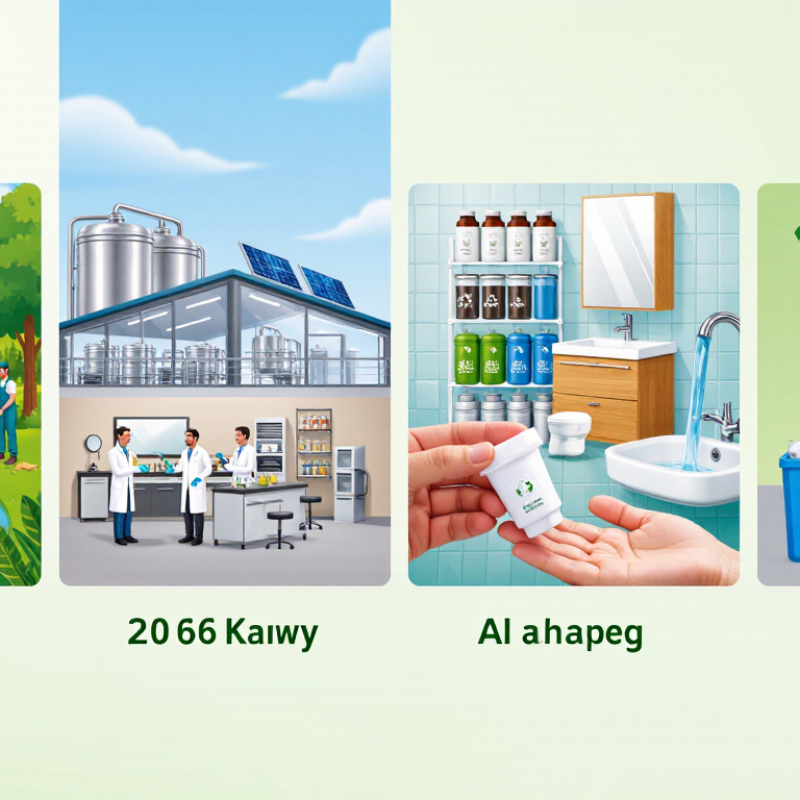
What Is Sustainable Beauty and How to Develop Products?

Defining Sustainable Beauty and Its Core Principles

Sustainable beauty means reducing environmental and social harm throughout a product’s entire life cycle. It begins before formulation, with ingredient sourcing, energy use, water consumption, packaging, transport, and disposal. A responsible definition also protects people. That includes worker safety, fair purchasing practices, honest claims, and products tested for their intended use. Safety remains essential. “Natural” does not automatically mean safer or more sustainable; evidence must guide decisions.

Core principles become practical when teams measure real impacts. A formulator can compare biodegradable ingredients, recycled materials, and lower-temperature manufacturing. Packaging decisions should consider weight, recycled content, refill practicality, and local recycling access. A refill pouch may use less material, yet fail if customers cannot clean or return it. That trade-off deserves measurement. Product performance matters too. If a cream works poorly, consumers may use more or replace it sooner, increasing waste.

Transparency strengthens trust. Teams should document ingredient origins, testing methods, material percentages, and major limitations. Independent assessments, traceable records, and relevant standards can support these claims. Certification alone is not enough. No formula is impact-free. Development teams may discover incomplete supplier data or packaging that works only in certain regions. Admitting these gaps is more credible than presenting a flawless solution.

Assessing Environmental and Social Impacts Across the Product Life Cycle

Sustainable beauty begins before formulation. Product teams should map impacts from raw materials to disposal. This is life-cycle assessment, not a packaging exercise. The OECD’s Global Plastics Outlook reports that plastics created 1.8 gigatonnes of lifecycle emissions in 2019. That figure covers the wider economy, yet it exposes beauty’s material risk. Pumps, caps, multilayer sachets, and transport each add hidden burdens. Small formats matter.

UNEP’s 2023 Turning off the Tap report says existing solutions could reduce global plastic pollution by 80% by 2040. For a new cleanser, test concentrated formulas, lower-temperature processing, recycled inputs, and realistic refill behavior. A refill system can still fail when transport is heavy or cleaning requires excessive water. The container is not the whole story. Measure factory energy, water withdrawal, wastewater, and end-of-life recovery under actual regional conditions. Laboratory assumptions often look cleaner than household behavior.

Social assessment needs equal attention. UNICEF and the International Labour Organization estimated that 160 million children were in child labour in 2020, including 79 million in hazardous work. This is not a beauty-specific estimate. It is a warning about complex supply chains. Audit farms and processors for wages, working hours, safety, land rights, and grievance access. Supplier questionnaires alone are weak evidence. Use worker interviews, purchasing records, and corrective-action follow-up. Our assessment may remain incomplete. Data can disagree. Document assumptions, update them annually, and disclose boundaries when carbon, water, and social scores point in different directions.

What Is Sustainable Beauty and How to Develop Products?

Assessing environmental and social impacts across the product life cycle

Sustainable beauty requires impact assessment from raw-material selection and packaging design through manufacturing, product use and end-of-life management. These global plastics-system benchmarks show why lightweight packaging, recycled content, responsible production and improved collection systems are important development priorities.

Data sources: OECD, Global Plastics Outlook (2022); OECD, Global Plastics Outlook: Policy Scenarios to 2060 (2022). Figures are global benchmarks and are not company- or brand-specific.

Selecting Sustainable Ingredients, Formulas, and Packaging Materials

Sustainable beauty starts with informed choices, not attractive claims. Ingredient selection should consider sourcing, processing, transport, biodegradability, and worker welfare. Ask suppliers for traceability records, safety data, and credible environmental evidence. A plant-derived ingredient may still require intensive farming or long-distance shipping. I have learned that “natural” does not automatically mean sustainable. No formula is perfect.

Tips: Begin with a clear product purpose. Select ingredients that perform well at effective, responsible levels. Compare concentrated and water-rich formulas carefully. Water reduction can lower transport weight, but it may affect user experience and preservation. Test it. Check microbial stability, skin compatibility, and performance during heat and humidity testing. Document every decision.

Packaging needs the same scrutiny. Lightweight containers may reduce transport emissions, while refill systems can create extra cleaning and logistics demands. Choose materials that suit local collection systems, not only theoretical recyclability. Avoid unnecessary layers, mixed materials, and oversized boxes. A simple mono-material tube may be more practical than a complex package with impressive features. I still question some choices after testing, because durability, accessibility, cost, and environmental impact can conflict. Reliable development means measuring these trade-offs and improving the next version.

Developing, Testing, and Certifying Sustainable Beauty Products

Sustainable beauty begins with product decisions, not attractive packaging. A development team should define measurable goals for ingredients, manufacturing, use, and disposal. I have found that supplier transparency is often the first obstacle. Request origin records, processing details, safety documents, and updated certificates before approving raw materials. Keep evidence.

A formula must also perform safely. Test pH, viscosity, preservation, microbial quality, and stability under heat and cold. Check the product in its final container, because packaging can change texture or contamination risk. Measure water use and energy during production when reliable data is available. Our first formula used a renewable ingredient, but its transport created a larger environmental burden than expected. That result forced a better review.

Certification requires organized proof, not hopeful language. Prepare batch records, ingredient specifications, supplier declarations, test reports, and documented claims. An independent certification body may assess sourcing, processing, packaging, and factory controls against a recognized standard. Claims such as “low impact” or “responsibly sourced” need clear evidence and defined boundaries. Avoid presenting a partial improvement as a complete solution. Not every improvement survives testing. Recheck the formula after each change, including fragrance, color, and packaging materials. Audits can reveal missing documents, inconsistent suppliers, or procedures that staff do not actually follow. A practical system leaves room for correction, because sustainable product development is detailed work rather than a perfect first attempt.

What Is Sustainable Beauty and How to Develop Products? - Developing, Testing, and Certifying Sustainable Beauty Products

A practical data framework for designing, testing, measuring, and certifying sustainable beauty products.

Development Dimension What It Means Relevant Data to Collect Recommended Development Approach Testing or Verification Useful Standard or Reference
Life-cycle assessment Evaluating environmental impacts from raw-material extraction through manufacturing, use, and end-of-life. Energy use, water consumption, greenhouse-gas emissions, transport distance, waste, and disposal scenarios. Define the functional unit, collect primary supplier data where possible, and compare alternative formulas and packaging systems. Independent review of the assessment model and data quality. ISO 14040 and ISO 14044 for life-cycle assessment principles and requirements.
Ingredient sourcing Selecting ingredients with credible environmental, social, and supply-chain information. Country of origin, agricultural method, extraction process, land-use risk, renewable content, traceability, and supplier declarations. Prefer traceable inputs, efficient extraction methods, lower-risk feedstocks, and suppliers able to provide documented chain-of-custody information. Supplier audits, document review, batch traceability, and identity or purity testing. ISO 16128 can be used to calculate natural and natural-origin content; it does not by itself certify sustainability or product safety.
Formula design Creating a product that delivers its intended performance while reducing avoidable environmental burdens. Ingredient concentration, renewable or recycled feedstock content, biodegradability data, toxicity information, and formula water content. Use the minimum effective ingredient level, reduce unnecessary formula complexity, and assess concentrated or waterless formats when appropriate. Stability, compatibility, microbiological quality, preservative efficacy, performance, and safety assessment. ISO 11930 for evaluation of antimicrobial protection of cosmetic products.
Water stewardship Reducing water use and limiting water-related impacts during production and consumer use. Water used per kilogram of product, process-water quality, wastewater load, rinse-off frequency, and product concentration. Improve cleaning efficiency, reuse suitable process water, develop concentrated formats, and avoid unsupported claims such as “water-free” when water is used in manufacturing. Meter readings, wastewater analysis, manufacturing records, and mass-balance calculations. ISO 14046 provides principles and guidelines for water-footprint assessment.
Packaging material Minimizing packaging impact while preserving product protection, hygiene, shelf life, and usability. Material type, packaging weight, recycled content, refill ratio, component count, barrier requirements, and material recovery options. Apply lightweighting, eliminate unnecessary components, design for disassembly, and select compatible mono-material structures where technically feasible. Packaging compatibility, leakage, drop, transport, aging, and closure-performance testing. ISO 18601–18606 cover packaging and the environment, including optimization, reuse, recycling, and recovery.
Material identification Making packaging materials easier to sort and process after consumer use. Resin identification, material composition, labels, coatings, adhesives, pumps, caps, and local recycling acceptance. Use clearly identified materials and avoid combinations that prevent sorting or reduce the quality of recycled output. Material composition analysis and review against the recycling infrastructure in the intended market. Common resin codes include PET #1, HDPE #2, and PP #5; a resin code does not guarantee local recyclability.
Manufacturing efficiency Reducing energy, material loss, emissions, and waste during production. Energy per batch, renewable-energy share, yield, scrap rate, process water, cleaning chemicals, and production waste. Improve batch yield, reduce idle time, optimize cleaning cycles, and separate recoverable production materials. Utility records, production yield reports, waste-transfer documents, and environmental-management audits. ISO 14001 provides a framework for environmental management systems.
Product safety Ensuring that sustainability choices do not compromise consumer safety or product quality. Toxicological profiles, exposure level, impurities, allergens, microbiological limits, stability, and packaging-contact risks. Complete a documented safety assessment before placing the product on the market and reassess changes to formula or packaging. Stability, challenge testing, dermatological testing where justified, analytical testing, and qualified safety review. ISO 22716 provides good manufacturing practice guidelines for cosmetic products.
Non-animal safety strategy Using validated or scientifically accepted approaches that do not rely on new animal testing where applicable. Existing ingredient data, in-vitro results, exposure assessment, read-across information, and regulatory requirements in each market. Use an integrated testing strategy and avoid repeating studies when reliable existing evidence is available. Validated in-vitro methods, literature review, expert toxicological evaluation, and regulatory dossier review. OECD Test Guidelines include validated in-vitro methods for selected endpoints; legal requirements vary by jurisdiction.
Claims substantiation Ensuring environmental and ethical claims are clear, specific, current, and supported by evidence. Claim definition, calculation boundary, baseline, test method, geographic scope, validity period, and supporting records. Use precise wording such as “contains 30% post-consumer recycled plastic by mass” instead of broad terms such as “eco-friendly.” Technical file review, laboratory reports, supplier certificates, and independent claim verification where required. ISO 14021 addresses self-declared environmental claims and requires claims to be verifiable and not misleading.
Organic and natural certification Demonstrating compliance with defined rules for ingredients, processing, packaging, and supply-chain controls. Permitted ingredients, organic content, processing aids, prohibited substances, packaging requirements, and audit records. Select a certification scheme before formulation is finalized and verify every ingredient and process against its current standard. Document review, supplier verification, formulation review, site audit, and periodic surveillance. COSMOS is an established standard for certified natural and organic cosmetics; certification requirements depend on the selected category.
Responsible raw materials Addressing deforestation, biodiversity loss, labor risks, and unclear origin in agricultural or forest-derived materials. Traceability level, land-use information, certification status, labor-risk assessment, and grievance or remediation records. Use documented responsible-sourcing policies and avoid materials with unresolved high-risk origins. Chain-of-custody checks, supplier audits, risk screening, and certificate validity checks. Recognized systems include FSC for certain forest-based materials and RSPO standards for palm-based supply chains.
End-of-life design Considering what happens to the formula container and secondary packaging after use. Collection availability, sorting compatibility, material recovery rate, refill return rate, and disposal instructions. Design for reuse or recycling only when the necessary collection and processing systems exist in the target market. Packaging recyclability assessment, consumer-use trials, return-rate measurement, and local infrastructure review. Recyclability is market-specific; packaging material selection should be evaluated against actual local collection and sorting systems.
Certification readiness Preparing a complete, auditable evidence package for a relevant sustainability or organic certification scheme. Approved formula, supplier documents, certificates, manufacturing records, test reports, packaging specifications, and claim evidence. Create a requirements matrix, assign document owners, control revisions, and conduct an internal audit before external assessment. Independent certification audit, corrective-action review, certificate renewal, and ongoing change control. Certification is not interchangeable with legal compliance; both certification rules and applicable cosmetic regulations must be met.
Data-use note: Targets should be defined for the specific product, market, packaging format, and certification scheme. A sustainability claim should always state its measurement boundary and be supported by verifiable evidence.

Improving Product Transparency, Use, Disposal, and Continuous Sustainability

Sustainable beauty begins with honest information, not green language. Product transparency should explain ingredient functions, packaging weight, recycled content, and environmental boundaries. Claims need evidence, dates, and clear measurement methods. A lifecycle assessment can reveal hidden impacts from farming, manufacturing, transport, and disposal. The Ellen MacArthur Foundation reported that only 9% of plastic waste has been recycled globally. That figure makes vague recycling claims difficult to defend.

Use matters as much as packaging. Clear instructions can prevent overdosing, contaminated formulas, and unnecessary replacement. A cleanser used twice daily creates different impacts from a product used weekly. Brands should test realistic routines, not ideal ones. Disposal guidance must show how to separate pumps, caps, labels, and containers. Local systems differ. “Recyclable” does not always mean accepted at the household bin.

Progress also requires uncomfortable review. No package is impact-free. Refill systems may reduce material use, yet transport and cleaning can add emissions. UNEP’s 2023 Turning off the Tap report found that global plastic pollution could be reduced by 80% by 2040 through reuse, recycling, and redesign. Beauty companies can track these changes through annual product audits, supplier data, and post-use feedback. They should publish setbacks too. Continuous sustainability is less polished, but more credible.

FAQS

What does sustainable beauty mean?

It reduces environmental and social harm across sourcing, formulation, manufacturing, use, transport, and disposal. Worker safety, fair purchasing, honest claims, and product safety also matter. Nothing is impact-free.

Does natural automatically mean safer or more sustainable?

No. Natural ingredients can require significant land, water, energy, or transport. Use safety evidence and impact data before making decisions. The label alone proves little.

How can a team evaluate ingredients and packaging?

Compare biodegradability, recycled content, weight, energy use, water consumption, transport distance, and disposal options. Test whether refill containers can be cleaned, returned, and accepted locally. A lighter package may still fail.

What testing is needed for a sustainable beauty product?

Test pH, viscosity, preservation, microbial quality, and stability in heat and cold. Test the formula inside its final container. Packaging can alter texture or contamination risk.

What evidence supports sustainability claims?

Keep origin records, processing details, safety documents, supplier declarations, test reports, and batch records. Define claim boundaries, dates, and measurement methods. Do not call a partial improvement complete.

Why does product performance affect sustainability?

A weak product may be overused or replaced quickly, creating more waste. Measure realistic routines, such as twice-daily cleansing or weekly treatment. Performance is part of environmental impact.

How should consumers receive disposal instructions?

Explain how to separate pumps, caps, labels, and containers. State that local recycling rules differ. “Recyclable” does not guarantee household acceptance.

Can refill systems always lower environmental impact?

No. Refills may reduce material use, but transport, cleaning, and return systems can add emissions. Measure the full cycle before making a strong claim. The convenient option may not be the best one.

How can sustainability improve over time?

Conduct annual audits, update supplier data, and collect feedback after use. Publish gaps, failed tests, and corrected practices. Progress can look unfinished.

Conclusion

Sustainable beauty is an approach to creating personal care products that reduce environmental harm while supporting ethical labor, consumer safety, and long-term resource protection. To understand how to develop sustainable beauty products, companies should assess impacts across the entire product life cycle, from ingredient sourcing and manufacturing to transportation, use, and disposal. This includes choosing renewable, responsibly sourced ingredients, efficient formulas, and packaging materials that minimize waste without compromising quality or safety.

Product development should combine performance testing with environmental and social evaluation. Clear certification standards and reliable documentation can help verify responsible claims, while transparent ingredient information and practical usage guidance enable consumers to make informed choices. Sustainable design should also consider refill systems, recyclable or compostable components where appropriate, and responsible end-of-life instructions. By measuring results, listening to stakeholders, and improving formulations, packaging, and production processes over time, beauty businesses can make sustainability a continuous commitment rather than a one-time marketing message.

Sophia

Sophia

Sophia is a dedicated marketing professional with an exceptional depth of knowledge about her company's products and services. With a keen understanding of market trends and customer needs, she crafts insightful blog posts that not only inform but also engage readers, enriching the company’s online......